
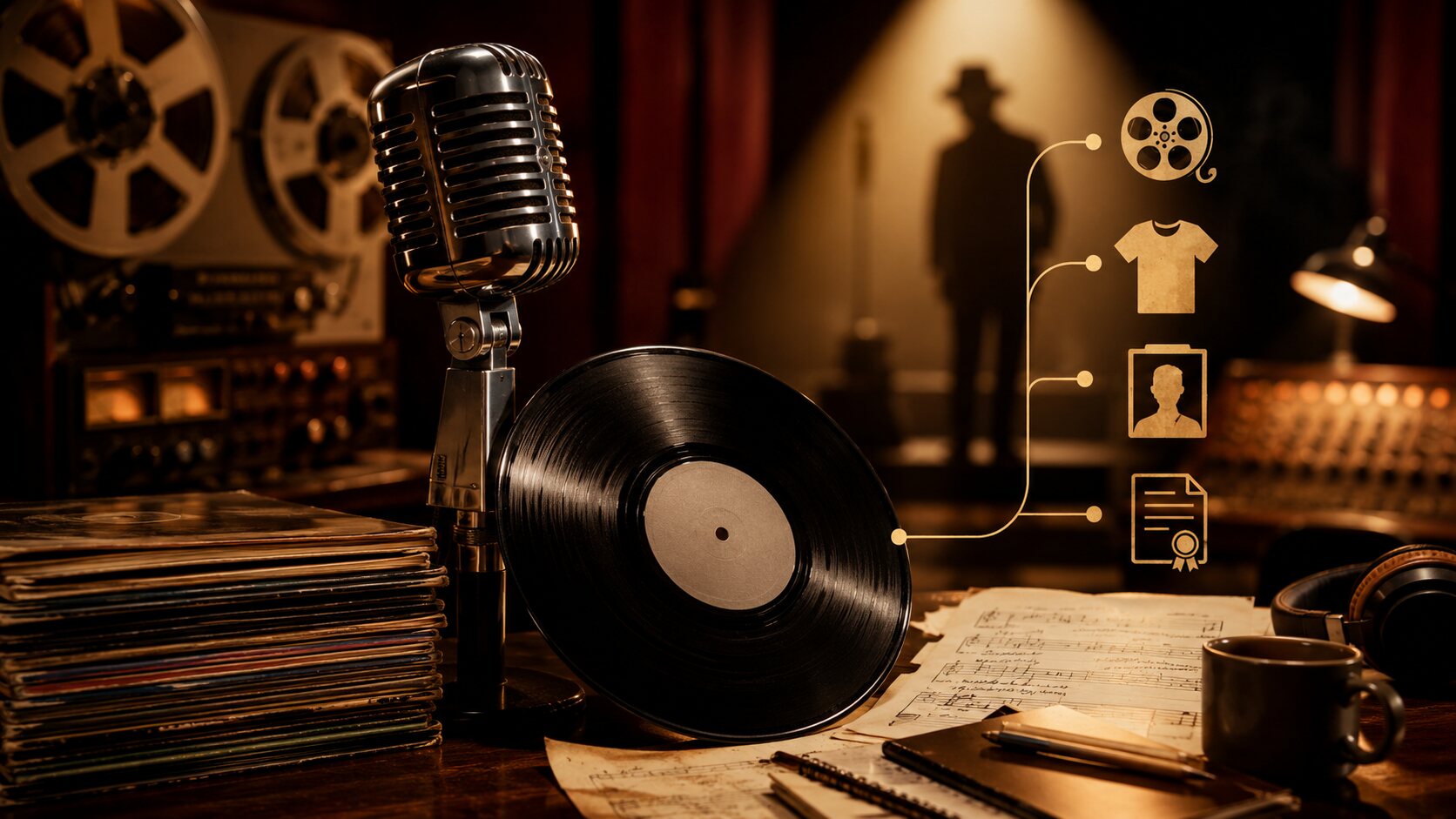
Primary Wave Music’s new partnership with the estate of Wilson Pickett demonstrates how the definition of a valuable music catalog is expanding.
The agreement covers work with the estate on Pickett’s music-publishing catalog and gives Primary Wave a share of his name, image and likeness rights. The company says its marketing and publishing teams will pursue branding, synchronization, digital, film and television opportunities.
Financial terms and the exact ownership percentages were not disclosed.
Pickett’s repertoire includes recordings and compositions associated with enduring soul standards such as “In the Midnight Hour,” “Mustang Sally” and “Land of a Thousand Dances.” Those works continue to generate value through performance, licensing, recordings and placements in visual media.
The identity-rights portion of the agreement is equally important.
A composition copyright, a sound-recording copyright and a performer’s identity are not the same asset. Different people or companies can control each one. Permission to use a song does not automatically authorize an advertiser, film producer or technology company to use an artist’s name or create a digital imitation of that performer.
That distinction has become more consequential as synthetic-voice and generative-music systems make it easier to evoke recognizable artists. Estates, labels, publishers and technology companies now need to establish who may authorize a digital replica, how the performer is represented and how revenue is divided.
The Primary Wave announcement does not say that a digital Wilson Pickett project is planned. It does show that identity rights are being treated as a commercial asset alongside the songs.
For independent artists, the lesson is immediate. Contracts should identify which rights are being granted, for how long, in which territories and for which uses. Artists should not assume that a publishing, distribution or recording agreement leaves every aspect of their identity under their control.
For estates, catalog development can extend a legacy through documentaries, merchandise, educational projects, synchronization and carefully authorized new experiences. The risk is that aggressive commercialization may weaken trust if the artist’s voice or image is used in a manner the audience considers inauthentic.
The strongest catalog strategy therefore protects both revenue and reputation. A song can be licensed repeatedly. An artist’s identity can be damaged by one poorly judged use.