
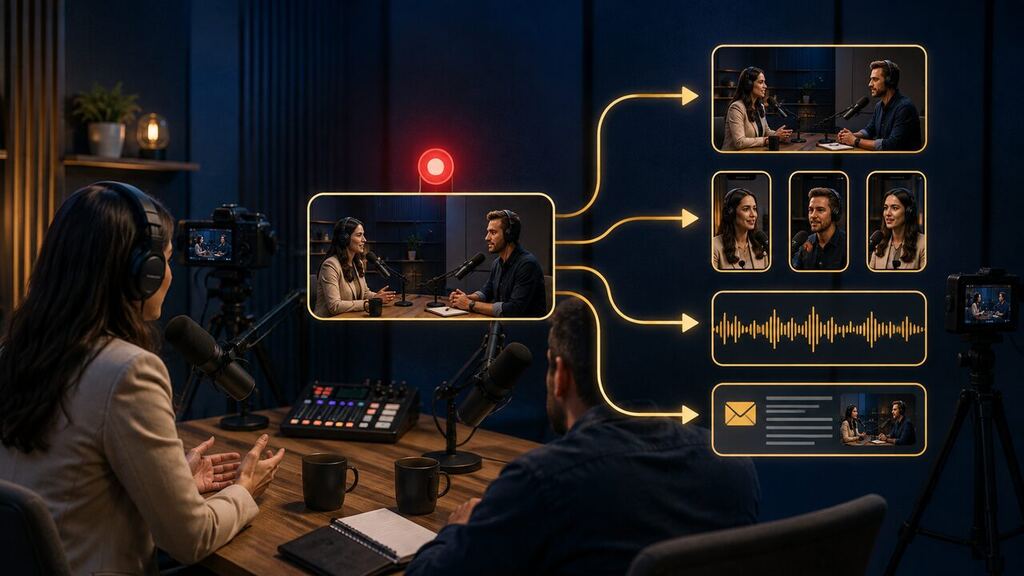
The next stage of podcasting may not be a longer audio program. It may be treating every recording session as the source for multiple independent products.
Speaking at Radiodays Asia on September 2, Podcast Network Asia founder Ron Baetiong said traditional audio podcasts compete for the portion of media budgets left after most spending has already been allocated. He described a strategy built around YouTube, long-form TikTok, standalone clips and integrated branded content rather than relying only on inserted audio spots.
Baetiong claimed that refocusing on video produced ten times the audience and significantly higher revenue for his operation. Those figures were presented at the conference and have not been independently audited.
When the excerpt no longer serves the full episode
A Japanese example makes the shift clearer. FUBI’s Naoya Nishiyama discussed an hour-long question-and-answer podcast that is also divided into separate video clips for each response. The clips reach enough people that the producer no longer treats them merely as promotional material driving audiences back to the complete program.
That reverses the conventional production hierarchy. Instead of making one primary show and several advertisements for it, the full interview, each focused answer, the audio feed, the written article and the newsletter can all become finished products serving different audiences.
Another model: listeners and companies fund the program
Podnews reports that Japanese history program Coten Radio carries no conventional advertising. More than 10,000 listeners reportedly contribute at least ¥1,000 per month, while approximately 100 companies contribute at least ¥50,000 monthly.
That does not mean every independent podcast can reproduce the model. It does demonstrate that direct support, corporate patronage, branded productions and platform video revenue can be assembled into a larger business than conventional audio spots alone.
A practical test for independent publishers
Before investing in an expensive video operation, a publisher can run one controlled experiment. Produce a single interview as:
- One complete audio episode
- One complete video program
- Four to six self-contained vertical clips
- One written news or feature article
- One newsletter item with a direct audience call to action
Measure production hours, completion rates, subscriber growth, sponsorship inventory and actual revenue for each version. If the clips reach more people but require substantially more labor without generating audience ownership or income, the strategy needs adjustment.
For radio and independent media, the larger lesson is familiar: one strong interview can work much harder when it is planned from the beginning for every platform instead of being repackaged as an afterthought.
Source: Podnews’ September 2 report from Radiodays Asia. Audience and revenue figures attributed to conference presenters remain their claims.