
From:
The Radio Now News Room
KCAL 96.7 has removed every on-air personality from its lineup and launched an “All Music, All the Time” presentation, turning one Southern California radio station into a national test of what local radio believes it is selling.
Anaheim Broadcasting dismissed the Inland Empire Classic Rock station’s full-time, part-time and weekend air staff on Friday. The new no-jock format began Saturday with the promise of “fewer interruptions and more music.”
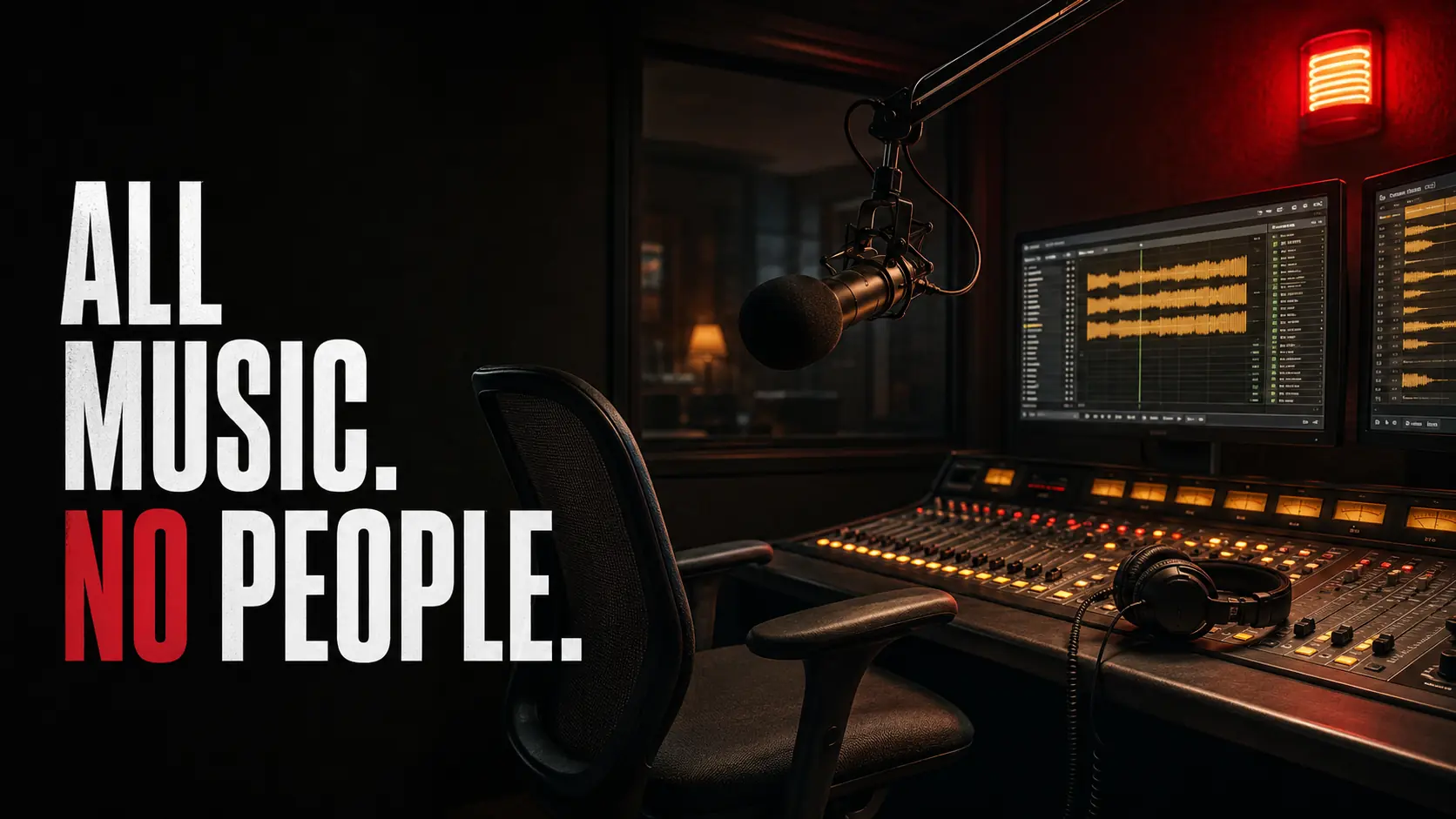
The transmitter is still operating. The music is still playing. The red light is still on.
But the people are gone.
Decades of audience relationships disappeared in one decision
The reported departures include morning host Patrick Tish, midday personality Nikki Preston, afternoon host Daryl Norsell and evening host and Program Director John DeSantis, along with the station’s part-time and weekend staff.
Norsell said he had spent 42 years with KCAL, including 36 years in afternoon drive. That is not simply an employee leaving a shift. It is four decades of listener familiarity, community history and advertiser relationships walking out the door.
The staff members themselves disclosed the cuts publicly. DeSantis described the station’s new direction as automated and “human-less.”
Anaheim Broadcasting Chief Operating Officer Kelly Sanders said the rebuilt KCAL would emphasize the Classic Rock songs listeners know and provide a more consistent experience with broader audience and advertiser appeal.
That may be the company’s strategy. Now it needs to prove that the strategy produces something more valuable than the people it removed.
“More music” is the same promise every streaming service can make
Radio has spent years telling advertisers and regulators that it remains essential because it is local, immediate and connected to the community.
Spotify can supply uninterrupted Classic Rock. So can Apple Music, YouTube Music, Pandora and countless commercial-free personal playlists. They can offer more songs, fewer interruptions and deeper catalogs without maintaining a broadcast tower.
A local station’s competitive advantage is what those services cannot easily replicate: trusted personalities, market knowledge, local conversation, emergency information, community appearances, and relationships built over years.
When a station eliminates all of that to provide more music, it is voluntarily entering a competition in which digital platforms already have the larger catalog and the more personalized product.
Automation may reduce payroll—but what value does it leave with the people?
Removing an air staff will clearly reduce certain expenses. The more important question is whether those savings exceed the value the station may lose.
Radio News Now wants to know:
- What audience research supported eliminating every personality?
- What were KCAL’s ratings and revenue before the change?
- How much income came from personality endorsements, appearances and promotions?
- Will the commercial load actually decrease, or will only the personalities disappear?
- Who will provide urgent local information during fires, earthquakes or other emergencies?
- Who will interview community leaders, musicians and local organizations?
- How will the station maintain social-media and community engagement?
- What specific ratings, revenue and advertiser-retention goals will determine whether the strategy worked?
Those are not sentimental questions. They are business questions.
The timing exposes radio’s central contradiction
The KCAL decision comes as the radio industry continues promoting research showing that listeners trust favorite hosts and respond to personality endorsements.
Stations regularly tell advertisers that a familiar voice can make a commercial more credible. Industry leaders say personalities create companionship. Programmers say localism is radio’s lifeblood.
If those claims are true, eliminating an entire air staff is not simply trimming overhead. It is removing part of the product the industry says advertisers should pay to reach.
This is now a measurable test
It would be premature to declare the new format a failure before the audience has responded. It would be equally premature for the company to assume that uninterrupted music will automatically create broader appeal.
Radio News Now will monitor KCAL’s ratings, advertising activity, digital engagement, community presence and any future staffing changes.
The larger question extends far beyond one station:
If radio removes the personalities, local knowledge and human connection that distinguish it from a playlist, what exactly is left for listeners and advertisers to choose?
A transmitter can distribute music without people. A local radio station earns its place in the community through the people who show up.
KCAL has chosen the first model. Now the audience will decide whether that is enough.