
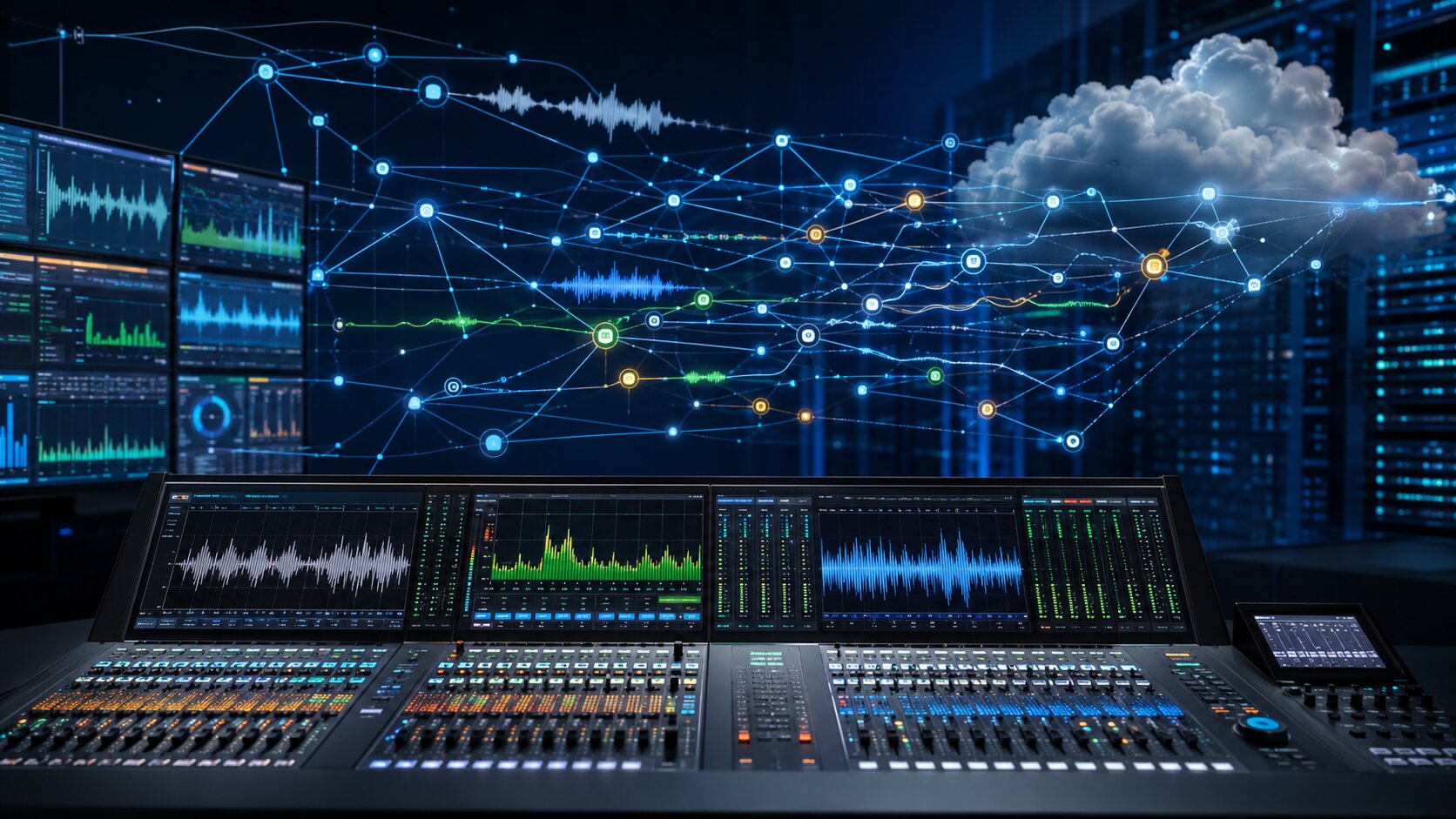
The traditional silence detector is no longer enough for a broadcast operation carrying hundreds or thousands of audio paths across studios, data centers and cloud services.
Telos Alliance says it will demonstrate a broader “audio observability” approach at IBC 2026. The concept is designed to monitor signal health, audio format, metadata, compliance and speech intelligibility across large software-defined systems where an engineer cannot listen continuously to every feed.
In a conventional air chain, an operator may be able to follow the signal from a studio console through processing and transmission. Modern IP systems can route, transform, duplicate and repurpose audio dynamically. A program might pass through separate applications for mixing, loudness control, captioning, streaming, podcasting and distribution before reaching an audience.
Each additional stage creates another opportunity for failure.
A path may contain audio but still be wrong. It could carry the incorrect language, lack required metadata, use an unexpected channel format, contain speech that is technically present but unintelligible or feed the wrong destination. A simple meter or silence alarm would not identify all of those problems.
Telos says automated analysis can give engineers system-wide visibility and help them find issues before the audience hears them. The company will present the capabilities at the IBC show in Amsterdam, which begins September 11.
The announcement is a product preview, not an independent demonstration that the system will detect every meaningful fault. Broadcasters evaluating it should ask several practical questions.
Does the monitoring work with equipment and applications from other manufacturers? How are urgent problems separated from routine warnings? Can the system detect intermittent faults and packet loss? Does it maintain a useful history for diagnosing a failure after the event? What happens if the monitoring platform, network connection or cloud service becomes unavailable?
Smaller stations should also examine the entry cost. Enterprise-wide observability may be valuable in a network managing thousands of paths, but a local operation needs to know whether the same tools can monitor a modest AoIP system without another expensive subscription or dedicated specialist.
The larger lesson is sound. As broadcasting becomes more software-defined, technical confidence cannot depend on a person watching one meter. Operators need monitoring that follows the complete signal and understands whether the audio is not merely present, but correct and usable.
Radio News Now will seek a demonstration and ask Telos to test the system against real failures, including silence, missing metadata, incorrect routing, packet loss and degraded speech.