The music industry has decided that artificial intelligence cannot simply walk onto an official chart without showing identification.
That part makes sense.
An AI-assisted recording should not be built with an unauthorized model, imitate a performer without permission, violate copyright, or climb a chart through fraudulent streams. Artists deserve protection. Listeners deserve honesty. Charts deserve integrity.
But the industry is moving beyond disclosure. It is beginning to decide which AI-involved recordings are eligible to count at all.
That raises a bigger question:
If real people are listening, saving, buying, requesting, and returning to a recording, where does their judgment enter the decision?
What IFPI has put in place
On July 30, the International Federation of the Phonographic Industry announced that it was rolling out global principles for recordings developed with generative AI.
Under the framework, an AI involved recording must satisfy six conditions to qualify for the official charts covered by the policy:
- The AI service must be authorized and lawful.
- The recording must be “substantially human-made.”
- It must not raise manipulation concerns.
- It must comply with copyright, related rights, and personality-rights laws.
- Releasing it must not violate the AI service’s terms.
- Its use of generative AI must be appropriately disclosed to listeners.
IFPI has applied the principles to charts it directly manages in parts of Latin America, the Middle East, Africa, and Southeast Asia. It is also working with national organizations to expand the framework across more than 20 additional chart programs, including markets in Europe, Asia, Australia, and New Zealand. IFPI published the complete rollout and market list.
As of this article’s publication, Radio News Now has found no announcement that Billboard or Mediabase has adopted this framework.
The industry has legitimate concerns
Let us be clear: streaming fraud is not audience demand.
A warehouse full of devices playing a track on repeat is not a fan base. An unauthorized vocal clone is not a new artist. A recording produced from stolen work does not become legitimate because enough automated accounts played it.
The industry is right to defend charts against that behavior.
The new policy also leaves room for properly licensed AI as part of the creative toolbox. IFPI’s position is not that every use of AI disqualifies a song. The stated dividing line is between human-led creativity using authorized tools and work that is purely synthetic, unlawfully produced, or fraudulently promoted.
That sounds reasonable—until we reach three words that could determine a recording’s future:
“Substantially human made.”
Who gets to define “human”?
IFPI has not published a percentage test or detailed creative-contribution formula.
That leaves serious questions:
- If a human writes and performs the song but AI generates part of the arrangement, is it substantially human-made?
- If musicians perform every note but AI helps write lyrics, what then?
- Does the lead vocal matter more than the composition, production, or instrumental performance?
- Is AI mastering treated like AI composition?
- Who verifies the artist’s creative record?
- What evidence must an independent artist preserve?
- Can an artist challenge a chart exclusion?
- Will the same recording qualify in one country and fail in another?
These are not technical footnotes. A chart position can affect publicity, radio consideration, booking, licensing, investment, and an artist’s negotiating power.
If eligibility turns on an undefined phrase, the industry needs a transparent standard and a meaningful appeal process.
A chart is becoming more than a measurement
Charts have never been perfect. Their formulas choose which transactions, streams, broadcasts, and platforms count. Fraud controls have always been necessary.
But audiences generally understand a chart as an account of measurable public activity: what people bought, played, streamed, requested, or heard.
Once a chart excludes a lawfully released recording because an industry organization decides it is not human enough, the chart is doing something different. It is no longer measuring only popularity or consumption. It is applying a creative-value judgment before the audience’s behavior can fully count.
That may be defensible, but it should be described honestly.
And the audience should not be treated as an afterthought.
Popularity does not erase rights, but rights do not measure appeal
Listener demand cannot legalize infringement. If a recording violates copyright or misuses someone’s voice, millions of streams do not cure the violation.
But legal compliance and audience response are two different questions:
- Was the recording created and released lawfully?
- Do real listeners value it?
Streaming-fraud analysis answers a third question:
- Is the measured activity genuine?
Those three decisions should not be collapsed into one closed industry judgment.
A credible chart system could require lawful production, verify authentic activity, disclose meaningful AI use, and then let genuine listener behavior speak.
Where The Hit Predictor can add evidence
Streams show that a play occurred. They do not explain whether listeners liked the recording, wanted it again, connected emotionally, or would choose it without algorithmic pressure.
Independent listener research can help separate exposure from demand.
The Hit Predictor can measure:
- Overall appeal
- Replay intention
- Emotional connection
- Perceived originality
- Authenticity before and after AI disclosure
- Willingness to save or recommend
- Whether a genre or AI label changes the response
- Which audience responds most strongly
That evidence should not replace copyright review or fraud detection. It adds the part of the conversation that only listeners can supply.
Protect the charts, but do not lock out the public
The music industry should protect artists from unauthorized training, vocal theft, impersonation, and manipulated streams. Those protections are overdue.
But protection and control are not the same thing.
If industry organizations set the rules, interpret an undefined standard, decide which tools are acceptable, and determine which recordings may enter the chart, they must also explain where independent creators can appeal, and where authentic audience choice is allowed to matter.
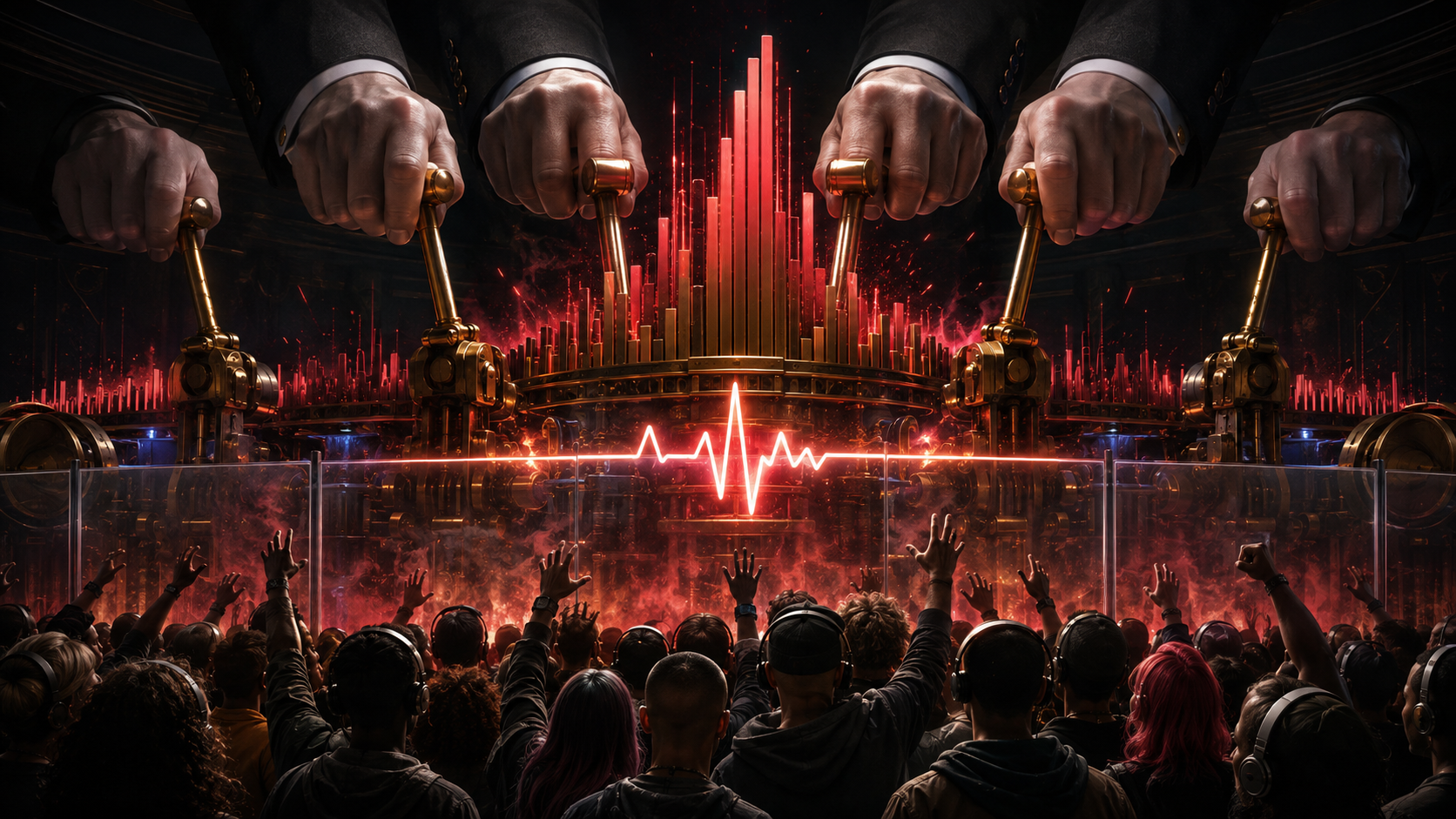
The labels and chart organizations may operate the machinery.
They should not be the only ones deciding what music is meaningful.
The listener still deserves a vote.