
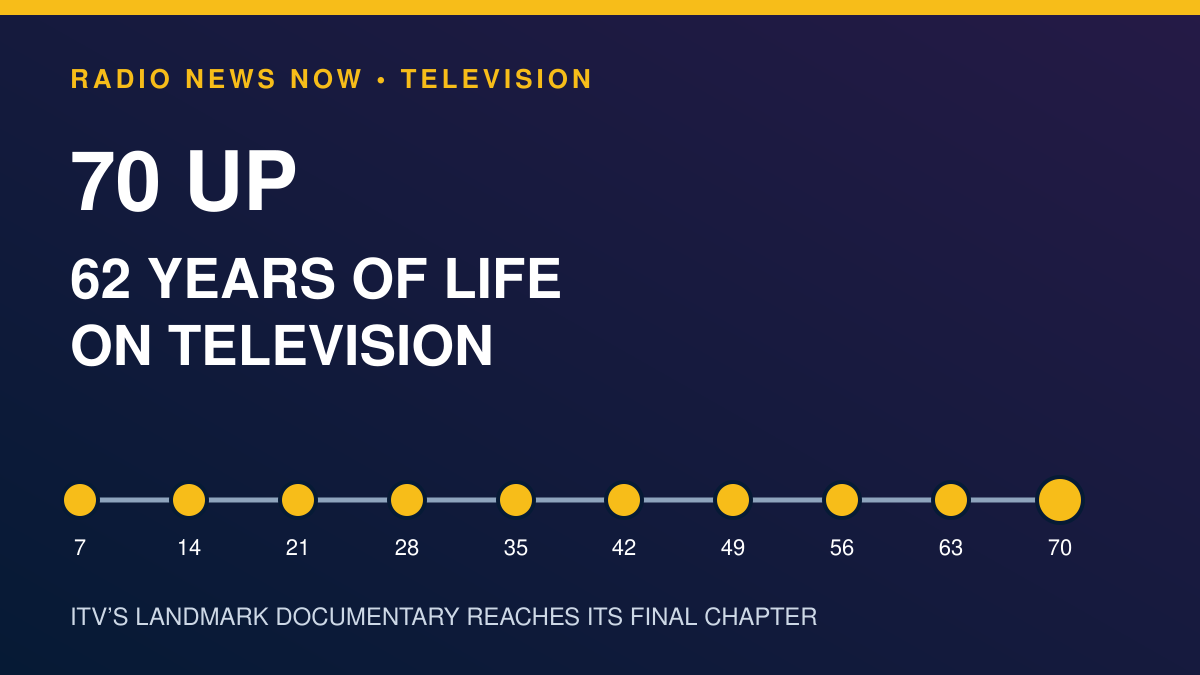
ITV’s 70 Up will bring one of television’s most important documentary projects to a close on September 15, 62 years after cameras first introduced viewers to 14 British seven-year-olds.
The series returned to the participants every seven years, creating a record of individual lives as well as changes in class, family, work, health and British society. The final chapter will air as two 90-minute programs on ITV1 and ITVX.
A television idea that outlived its original premise
Seven Up! began in 1964 as an examination of how social class might shape children’s futures. Michael Apted, who worked on the original program and directed the later installments, turned that one-time documentary into an extraordinary continuing relationship among filmmakers, participants and viewers.
Apted died in 2021. Oscar-winning filmmaker Asif Kapadia directed the concluding installment, working with longtime producer Claire Lewis and the surviving participants. The change in director makes the final production more than a routine continuation: it must complete another filmmaker’s life work while respecting people whose public identities have been shaped by the series since childhood.
The achievement—and the ethical tension
No conventional television panel can reproduce what Up accumulated: the ability to compare aspirations voiced at seven with choices and circumstances visible decades later. Its value came from time, continuity and the willingness of participants to return.
That same longevity creates hard questions. Some participants periodically declined to appear. Others criticized how a short edit could define them in the public mind for seven years. The series therefore belongs in any serious discussion of recurring consent, editorial power, participant care, compensation and the ownership of personal history.
What independent producers can learn
- Trust is a production asset that must be renewed, not assumed.
- Consent at the beginning of a project cannot answer every question that arises decades later.
- Archives gain value over time, making access and ownership terms consequential.
- Ordinary lives can produce extraordinary television when the storytelling allows time for change.
- Participant welfare must remain separate from the producer’s desire to complete the series.
70 Up closes a landmark program. It also leaves contemporary filmmakers with a demanding standard: if a production asks people to share their lives, the responsibility to those people lasts longer than the episode.