Radio News Now Staff
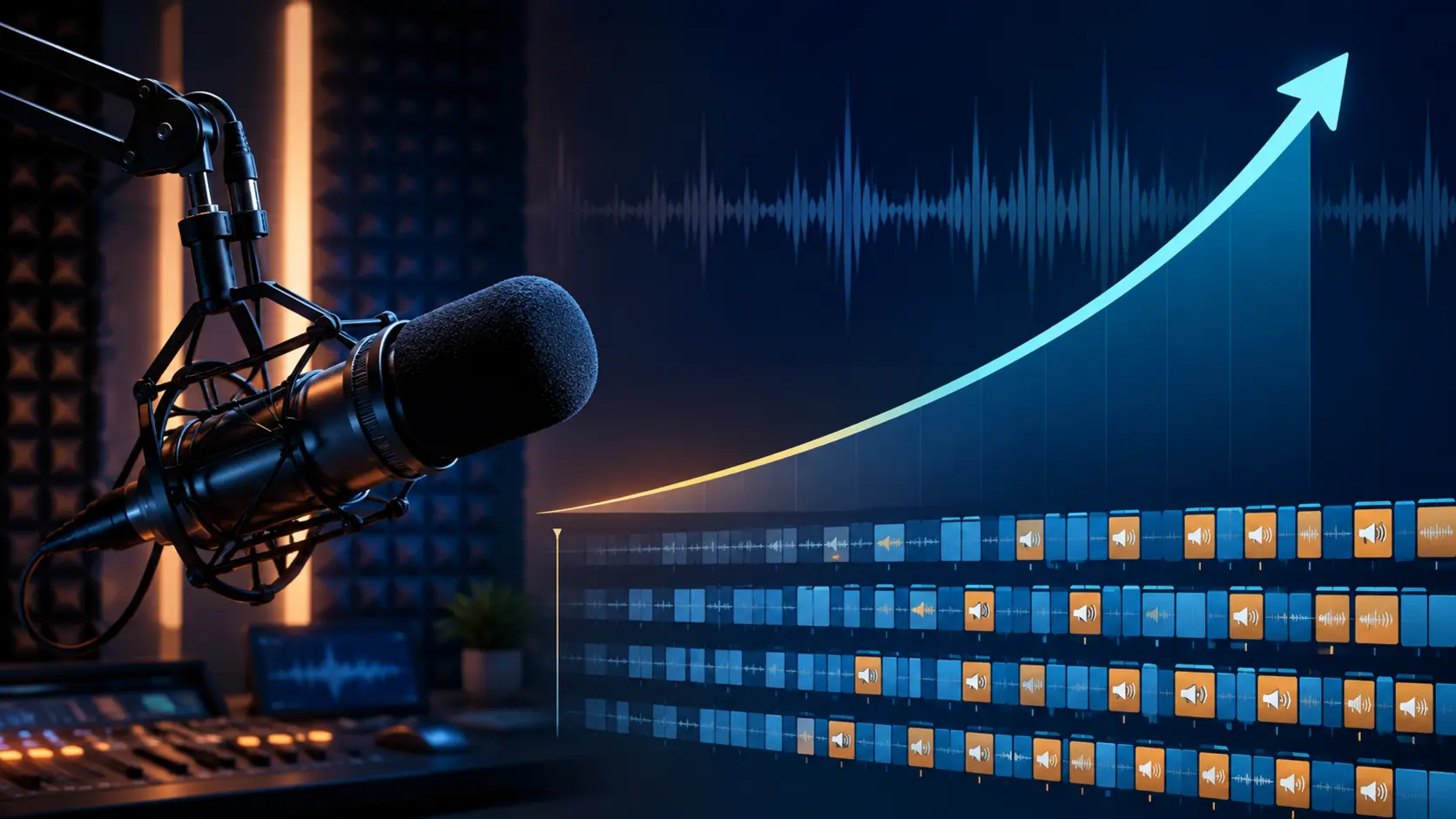
Podcast advertising kept expanding in the second quarter of 2026, with estimated spending up 23% from the same period a year ago, according to Magellan AI’s latest quarterly benchmark report.
The report counted 1,297 brands advertising in podcasts for the first time. That is a healthy vote of confidence from marketers still looking for the attention, trust and targeting that spoken-word audio can deliver.
But another number deserves just as much attention: average podcast ad load reached a record 8.75%.
In plain English, ad load is the share of a program devoted to advertising. An 8.75% average works out to roughly five minutes and 15 seconds of advertising in an hour of content, although the actual amount varies widely by show. The percentage itself may not sound alarming. The trend is the concern.
Magellan AI reported an average ad load of 8.24% in the first quarter of 2026. That means the average rose by more than half a percentage point in one quarter, even as year-over-year spending growth slowed from 28% in the first quarter to 23% in the second.
Growth is good. Clutter can cancel the advantage.
Podcasting’s sales pitch has long been that its ads feel more personal and less intrusive than a conventional commercial break. Host-read messages, relevant products and an intimate listening environment can create unusually strong advertiser response.
That advantage is not unlimited.
When producers add too many messages, stack several spots together or repeat the same advertiser excessively, a podcast starts to sound like the cluttered media it was supposed to improve upon. Listeners learn to reach for the skip button. Advertisers receive less attention. The producer may make more money from one episode while weakening the value of every future impression.
This is a familiar lesson for radio. Inventory can be sold only once, but listener trust must be earned every day.
Video is becoming part of the sales package
The latest benchmark also reinforces the growing value of video simulcasts. Advertiser renewal was reported at 44% for shows with a video version, compared with 34% for audio-only programs.
That does not mean every microphone needs a television studio. It does mean that a clean, watchable video feed can give a sales team more to offer: YouTube inventory, short social clips, sponsor graphics, product demonstrations and an additional place for audiences to discover the program.
For independent publishers, the best strategy may be a combined package rather than simply inserting more audio spots. One sponsor can receive an integrated host mention, a display placement in the video, inclusion in a newsletter and a limited number of social clips. That increases the value of the relationship without turning the program into a wall of commercials.
The Radio News Now takeaway
The 23% increase says podcast advertising is still a growth business. The record ad load says publishers must protect the product that created that growth.
Radio News Now recommends four practical rules for independent audio operators:
Set a firm ad-load ceiling before sales pressure sets the ceiling for you.
Price premium positions for attention and performance, not simply for the number of impressions delivered.
Package audio with video, newsletter and social inventory instead of adding more interruptions.
Track renewals and listener complaints as closely as gross sales.
The opportunity is real. So is the risk of loving the opportunity to death.