By Lee Michaels | Radio News Now
The Federal Communications Commission is putting the radio industry on notice: airplay should not be used as leverage to pressure artists into performing for free or for reduced compensation.
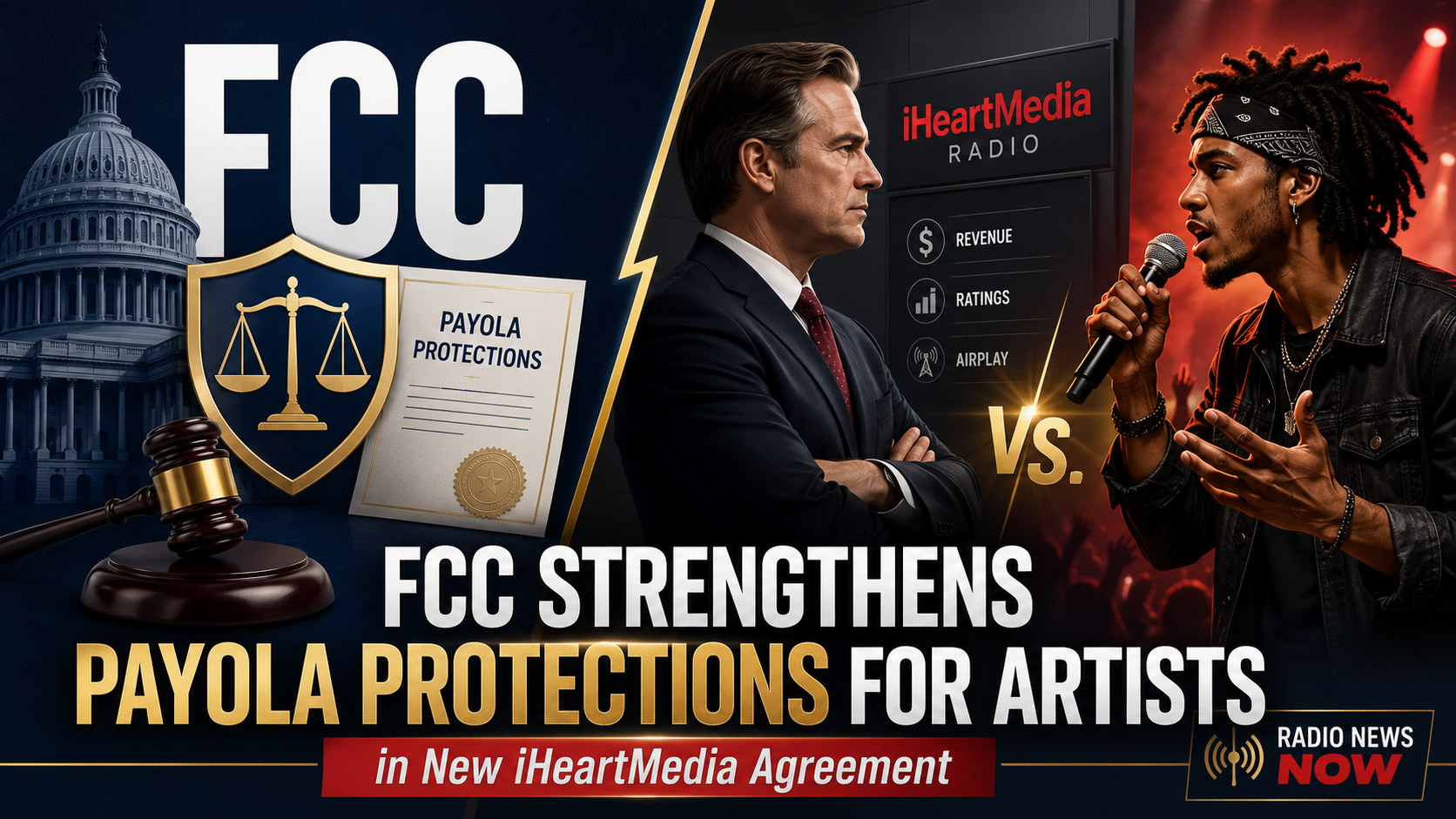
On July 9, 2026, the FCC announced that iHeartMedia, Inc. has agreed to enter into a consent decree with the agency following an Enforcement Bureau investigation into the company’s compliance with federal payola rules. The agreement focuses on what the FCC described as “payola” and, more specifically, a form sometimes called “showola.”
Showola involves a station or radio group allegedly pressuring artists to perform at station-hosted concerts, festivals, or promotional events for free or at reduced rates in exchange for more favorable airplay. The concern is simple: if artists feel they must perform for less money — or no money — to protect their spins, the playing field is no longer fair.
The FCC said the agreement will create stronger reporting and disclosure procedures designed to give the Commission more insight into the relationship between on-air spins and artist appearances at live events. That matters because iHeartMedia is the largest radio station owner in the United States and operates major live events and festivals around the country.
What the FCC Agreement Requires
As part of the agreement, iHeartMedia will be required to put several compliance safeguards in place, including:
- Designating an internal compliance officer
- Developing and implementing payola training procedures
- Producing regular reports to the FCC
- Establishing a whistleblower hotline for employees who suspect wrongdoing
The FCC said these steps are intended to help ensure there is no prohibited pressure placed on artists and no undisclosed relationship between airplay and live-event appearances.
FCC Chairman Brendan Carr said the agency is committed to making sure artists, especially up-and-coming artists, get a fair shake in their dealings with the broadcast industry. Carr also emphasized that an artist’s talent — and the listening public — should determine success, not hidden pressure connected to radio exposure.
Why This Matters to Artists
For decades, radio airplay has been one of the most powerful promotional tools in music. A record that receives consistent spins can build audience familiarity, drive streaming, sell tickets, and help break an artist nationally.
But that power also creates responsibility.
If an artist is told, directly or indirectly, that refusing to play a free station event could hurt their airplay, that is more than aggressive promotion. It becomes a question of fairness, transparency, and whether artists are being forced to trade their labor for access to the airwaves.
The FCC made clear that it is against federal law to use the threat of manipulated airtime to pressure artists into performing at live events for free or for reduced compensation.
Artists who believe they have experienced or witnessed suspected payola violations can report concerns directly to the FCC at payola@fcc.gov.
What Payola Means
Payola is the unreported payment or acceptance of money, services, or anything of value in exchange for broadcast airplay. Under federal rules, if something of value is exchanged for airplay, that relationship must be disclosed to the station licensee before broadcast. The station must also announce that the programming was paid for and identify who provided the money or other consideration.
In plain English: if airplay is bought, traded, pressured, or influenced by something of value, the public has a right to know.
Radio News Now Take
This announcement is a major reminder that radio’s influence still matters.
Even in the streaming era, terrestrial radio remains a powerful gatekeeper, especially for developing artists who are trying to move from local buzz to national recognition. When major radio companies host festivals, concerts, and promotional events, those relationships must be handled with transparency.
Artists should want to perform at radio events because it makes sense for their career, not because they fear losing spins.
This FCC agreement does not end the payola conversation. It reopens it.
And for artists, managers, labels, programmers, and station owners, the message is loud and clear:
Fair airplay should be earned by the music, not forced through backroom pressure.