
By Radio News Now Staff
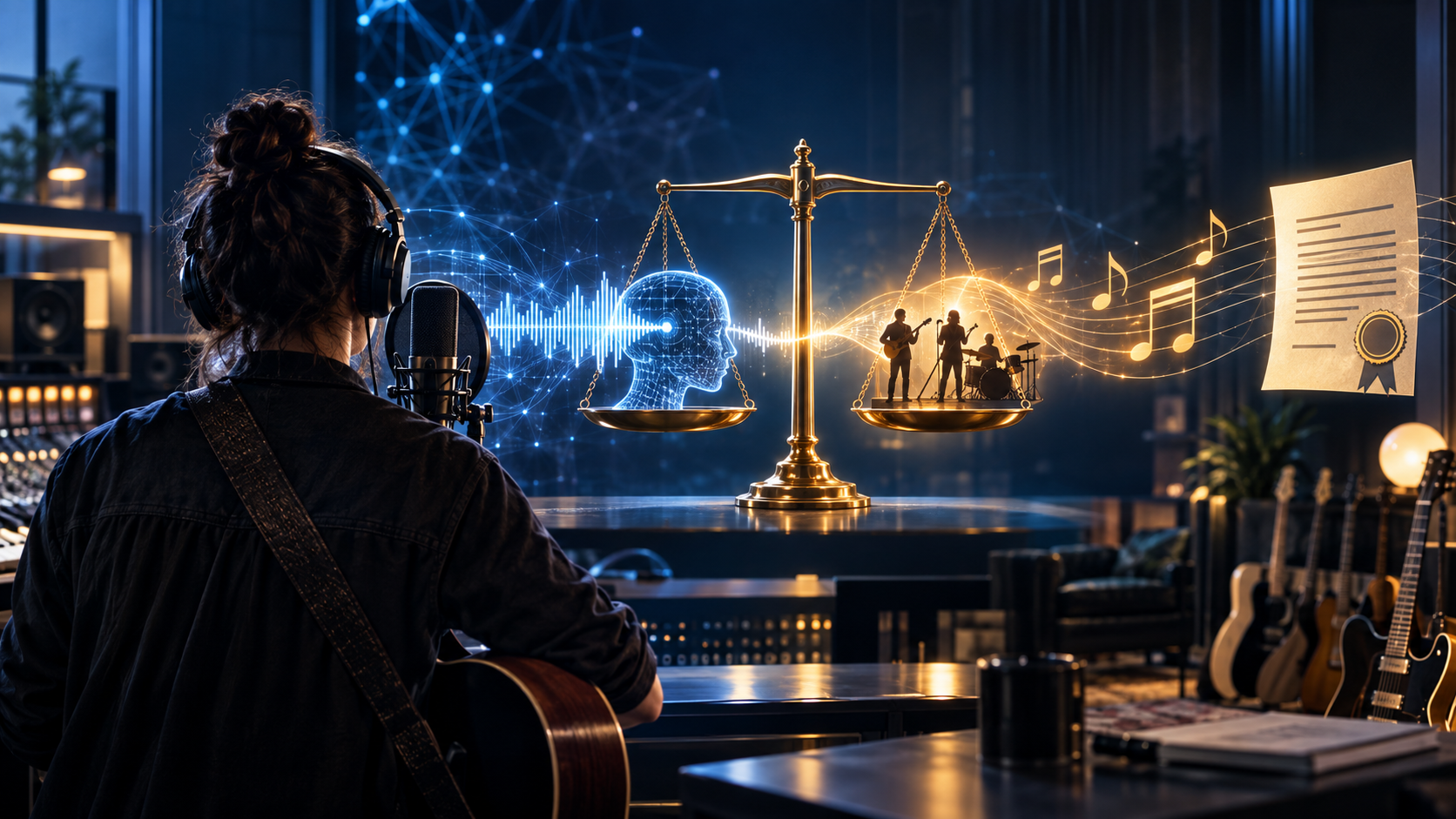
Suno has begun replacing its earlier AI music models with a new generation developed through licensing partnerships. The shift marks a major turn from courtroom confrontation toward negotiated access—but it does not settle every question involving artist voices, identities, radio airplay or music research.
On September 9, Suno launched its v6 family of music-generation models, developed with Warner Music Group, BMG and Believe. The company said it will retire its previous models and move the platform entirely to the new generation.
The launch follows the licensing strategy created after Warner Music Group settled its copyright dispute with Suno. BMG separately says its agreement protects and compensates participating artists and songwriters while settling prior use of BMG recordings and compositions.
This is not a new court ruling. It is something just as important for the business: the first visible implementation of a negotiated model in which music companies license material, artists may choose whether to participate, and compensation becomes part of the product.
Copyright licenses do not settle artist identity rights
Suno says the new generation includes stronger safeguards and will support future artist-specific experiences based on permission and payment. But a separate proposed class action filed by Jason Isbell, David Lowery, Guy Forsyth and Eduardo Calle raises a different legal question.
The musicians allege that Suno commercially exploited artist names, voices and recognizable identities. Their complaint relies on state publicity-right and biometric-privacy theories rather than copyright infringement.
Those are allegations only. No class has been certified, and no court has found Suno liable. Suno disputes the claims and says it blocks prompts involving specific artists and copyrighted songs.
The distinction matters: a company may obtain permission to use a recording or composition without automatically obtaining the separate right to imitate the performer identified with it. RNN previously examined that issue in Suno’s new legal fight over artist identity.
What this means for The Hit Predictor
The Hit Predictor does not create AI songs, train an AI music model or claim ownership of client productions. Its role is to receive music submitted by clients, play it for research participants and measure listener response. That makes THP’s direct exposure to AI-training lawsuits substantially lower than the exposure facing companies that build generative models.
However, “we only test the music” is not a complete legal shield. A research platform still stores, reproduces and plays submitted recordings. If a client uploads a track without the necessary rights—or submits an unauthorized imitation of a recognizable performer—THP could receive a complaint or takedown demand even though it did not create the recording.
The practical protection is contractual and operational. Every client submission should include:
- A warranty that the client owns or controls the recording, composition and all material used in the submission.
- Permission for THP to upload, store, reproduce, stream and analyze the song for research purposes.
- Confirmation that any identifiable voice, name, likeness, sample or AI-generated imitation has been authorized.
- An indemnification provision assigning responsibility to the submitting client if those promises are false.
- A clear complaint and takedown procedure, with prompt review when a credible rights claim is received.
THP should also confirm that its copyright-agent registration, repeat-infringer policy and Digital Millennium Copyright Act procedures match how the client upload system actually operates. DMCA protection is not automatic, and it generally does not replace separate publicity-right, trademark or privacy analysis.
No outcome in the current Suno cases automatically creates a new royalty or AI licensing charge for THP. The more likely near-term costs are contract review, documentation, rights verification and insurance. If courts or settlements force AI producers to license more training material, those costs would generally begin with the generator or producer and could later appear in client pricing.
What this means for radio
Radio does not become liable simply because it plays a lawfully supplied recording that used AI somewhere in the production process. Stations already broadcast music made with extensive software, sampling, vocal processing and other technology. The central question is authorization, not whether a computer was involved.
The risk changes when a track falsely presents itself as the work of a real artist, uses an unauthorized voice replica, contains uncleared samples or arrives without a reliable chain of rights. Standard music-performance licenses may cover compositions or particular transmissions, but they do not necessarily authorize the commercial exploitation of someone’s identity or cure a false endorsement.
Radio groups, internet stations and syndicators should begin requesting basic AI provenance from labels, distributors and independent promoters:
- Who owns and authorized the master and composition?
- Was an identifiable person’s voice or likeness generated or materially altered?
- Were samples, stems and uploaded source recordings cleared?
- Is the listed artist real, virtual, licensed or intentionally anonymous?
- Who accepts responsibility if a rights claim arrives?
For legitimate licensed AI music, this can become routine metadata—not a ban. For suspicious tracks, stations should pause promotion and verify the source before announcing that a famous artist performed, endorsed or participated in the recording.
The strongest signal from Suno’s new model
The industry is moving toward a divided market. Licensed AI tools will offer rights-holder participation, documented permissions and revenue sharing. Unlicensed systems and unauthorized replicas will face greater resistance from artists, distributors, platforms and courts.
For THP and radio, the safest position is not to judge a song by whether it is labeled “AI.” It is to require the same thing responsible music businesses have always needed: a clear chain of rights and someone willing to stand behind it.
Question of the Day: Should radio stations require AI-rights and voice-provenance information before adding a new song?
Sources: Suno v6 announcement; BMG–Suno strategic alliance; Reuters reporting; Isbell/Lowery proposed class-action complaint.
This article provides general information and does not constitute legal advice.